
In this unit you are going to learn:
a.- What are health and illness
WHAT ARE HEALTH AND ILLNESS?
HEALTH

Good health – for children – is all about striking the right balance between healthy eating and regular physical activity.
1.- HEALTH
When my body and mind work properly. My body and my mind are in good conditions.
Whatch this video, and it will help you to understand better what the health is.
PLAY THIS GAME
 http://www.sciencekids.co.nz/gamesactivities/healthgrowth.html
MY HEALTH
2.- ILLNESS


When my body or my mind does not work normally, I am ill.
Something inside my body is preventing that my body or mind work properly.
WATCH THESE VIDEOS
ILLNESS CAN BE:
- INFECTIOUS
Infectious diseases, such as common colds, are caused by harmful organisms called pathogens entering our body.
Examples
Different kinds of pathogens cause different kinds of diseases. Here are
some example diseases caused by each type of pathogen:
Viruses - Viruses are extremely small and consists of DNA with a
protective coating of protein. Diseases caused by viruses include
influenza, the common cold, measles, yellow fever, and hepatitis.
Bacteria - Bacteria are small microorganisms. They can cause
diseases such as tuberculosis, cholera, typhoid fever, and tetanus.
Parasites - Parasites are organisms that live off their hosts. Some
parasitic diseases include malaria, sleeping sickness, and scabies.
Fungi - Fungi are microorganisms such as yeasts and molds. They can
cause diseases such as fungal meningitis, ringworm, and thrush.
Read more at: http://www.ducksters.com/science/biology/infectious_disease.php
This text is Copyright © Ducksters. Do not use without permission.
Read more at: http://www.ducksters.com/science/biology/infectious_disease.php
This text is Copyright © Ducksters. Do not use without permission.
Different kinds of
pathogens cause different kinds of diseases. Here are some example
diseases caused by each type of pathogen:
Viruses - Viruses are extremely small and consists of DNA with a
protective coating of protein. Diseases caused by viruses include
influenza, the common cold, measles, yellow fever, and hepatitis.
Bacteria - Bacteria are small microorganisms. They can cause
diseases such as tuberculosis, cholera, typhoid fever, and tetanus.
Parasites - Parasites are organisms that live off their hosts. Some
parasitic diseases include malaria, sleeping sickness, and scabies.
Fungi - Fungi are microorganisms such as yeasts and molds. They can
cause diseases such as fungal meningitis, ringworm, and thrush.
Read more at: http://www.ducksters.com/science/biology/infectious_disease.php
This text is Copyright © Ducksters. Do not use without permission.
Read more at: http://www.ducksters.com/science/biology/infectious_disease.php
This text is Copyright © Ducksters. Do not use without permission.
Examples
Different kinds of pathogens cause different kinds of diseases. Here are
some example diseases caused by each type of pathogen:
Viruses - Viruses are extremely small and consists of DNA with a
protective coating of protein. Diseases caused by viruses include
influenza, the common cold, measles, yellow fever, and hepatitis.
Bacteria - Bacteria are small microorganisms. They can cause
diseases such as tuberculosis, cholera, typhoid fever, and tetanus.
Parasites - Parasites are organisms that live off their hosts. Some
parasitic diseases include malaria, sleeping sickness, and scabies.
Fungi - Fungi are microorganisms such as yeasts and molds. They can
cause diseases such as fungal meningitis, ringworm, and thrush.
Read more at: http://www.ducksters.com/science/biology/infectious_disease.php
This text is Copyright © Ducksters. Do not use without permission.
Read more at: http://www.ducksters.com/science/biology/infectious_disease.php
This text is Copyright © Ducksters. Do not use without permission.
The most common pathogens are bacteria and viruses. Other microorganisms, such as some kinds of fungi and protists, can also cause diseases.

- NON-INFECTIOUS
Non-infectious diseases, such as diabetes, are not caused by organisms. They are caused by different factors and cannot be spread from person to person.
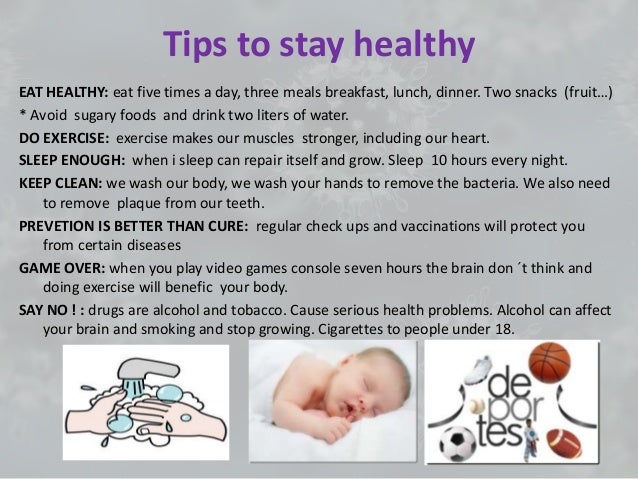
A healthy lifestyle helps prevent diseases. This includes a healthy diet, exercise, regular check-ups, and saying no to drugs and alcohol and an excessive use of video games.
SOME EXAMPLES OF NON-INFECTIOUS DISEASES.


SUM UP

SOME IMPORTANT DIFFERENCES BETWEEN INFECTIOUS AND NON-INFESTIOUS ILLNESSES.


HOW TO BE HEALTHY

ADVANCES IN MEDICINE

One way of developing immunity to some infectious diseases is through vaccination.

Doctors and physicians use a variety of diagnostic techniques to identify an illness, such as X-rays, electrocardiographs, blood tests, ultrasound scans and CT scans.

LET´S WATCH THIS VIDEO
LET´S WATCH THIS VIDEO IN SPANISH
HOW DO ANTIBIOTICS WORK?
There have been lots of scientific advances in the treatment of illnesses, such as antibiotics, which are used to treat infections caused by bacteria.

Since the invention of anaesthesia in 1800, there have been lots of advances in surgery and in other medical fields.


No hay comentarios:
Publicar un comentario